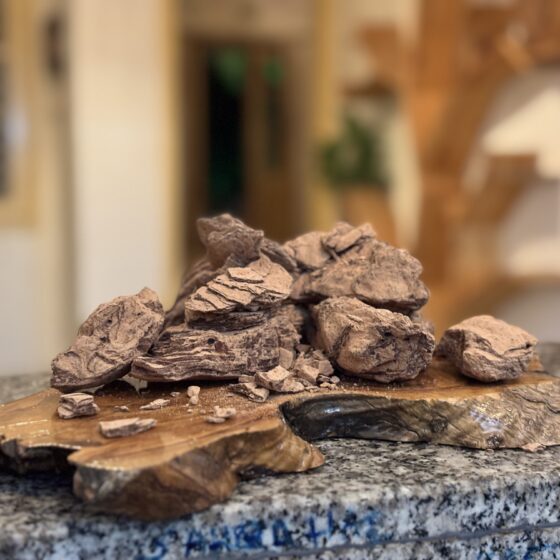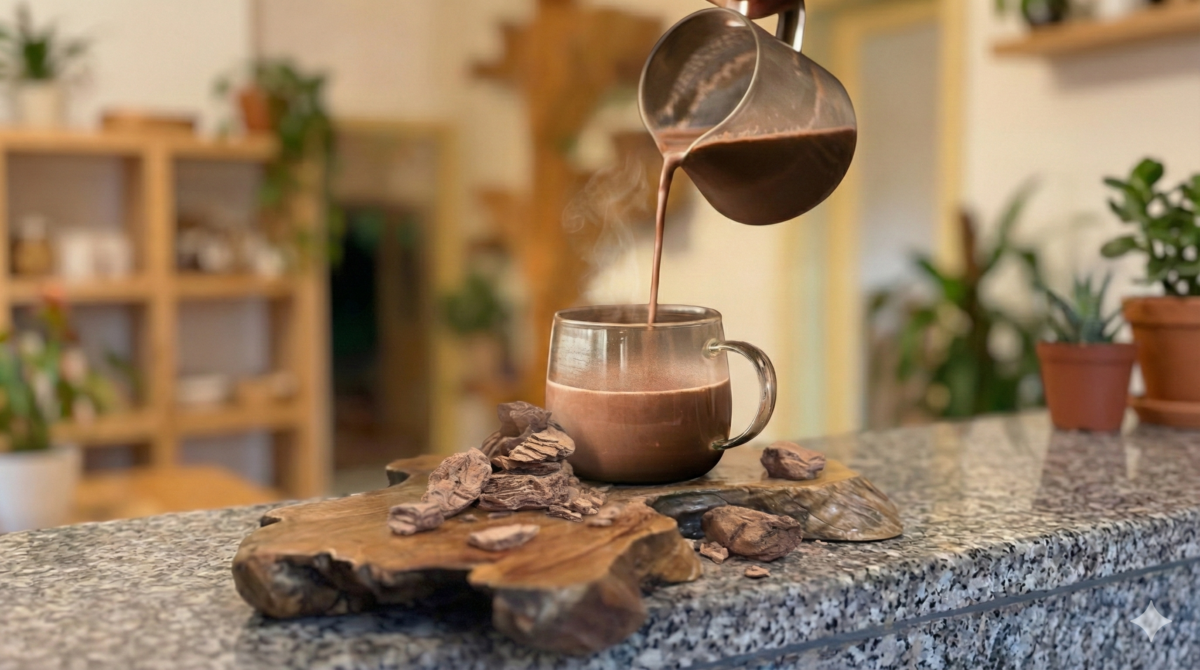
Modern-day cacao ceremonies are not about recreating ancient rituals from another time or culture. While cacao has been honored for centuries, the way people related to it in the past does not necessarily define how it should be experienced today.
What modern cacao ceremonies share with ancient traditions is not form, but intention — a genuine desire to connect with cacao, to listen, and to learn from it.
At its essence, a cacao ceremony is an invitation to slow down, to become present, and to reconnect.
What Is a Cacao Ceremony?
A cacao ceremony is the practice of relating with cacao through gratitude, intention, and reciprocity.
It can be experienced as a personal ritual or shared in a group setting. There is no single correct way to hold a cacao ceremony, as it is a living art that responds to the truth of the present moment.
When we engage with cacao ceremonially, we move beyond simply enjoying it as a flavorful beverage and begin to experience it as a guide for awareness and inner connection.
More Than a Beverage
Cacao is widely appreciated for its mood-enhancing, energizing, and nourishing qualities. While these benefits are meaningful, many Indigenous elders describe ceremony as a way of bringing life into alignment.
In this context, cacao becomes a teacher — one that gently supports us in reconnecting with our hearts, tending to our relationships, and moving through life with clarity and purpose.
The Three Pillars of Cacao Ceremony
Although every ceremony is unique, most cacao rituals are grounded in three universal principles:
Gratitude
Gratitude opens the ceremonial space. It begins by honoring cacao itself, the ecosystems it grows in, and the people whose care and labor make its journey possible.
True gratitude goes beyond words. When practiced with depth and presence, it becomes embodied — felt in the body rather than held only in the mind. This shift from head to heart allows us to meet cacao at its most resonant frequency.
Gratitude can be understood as the gateway to ceremony.
Intention
Even the highest-quality ceremonial cacao requires intention to become a true ceremonial experience.
Cacao does not force transformation. Instead, it gently opens the heart and invites connection. The depth of the experience depends on one’s willingness to be present and open.
By setting clear and specific intentions — whether for clarity, creativity, healing, or rest — we consciously collaborate with cacao, directing its energy toward what we wish to support.
Preparing cacao slowly, creating a clean and intentional space, and arriving fully in the body are all expressions of intention.
Reciprocity
Cacao ceremony is a relationship, not a transaction.
While cacao offers emotional and energetic support, ceremony also asks us to reflect on how we give back to the land, to communities, and to life itself.
Cacao originates in tropical ecosystems that are increasingly under threat. Reciprocity invites us to imagine new ways of living that regenerate rather than deplete, and to recognize our role within the wider web of life.
Through reciprocity, ceremony becomes an act of participation, not consumption.
A Living Practice
Working with cacao ceremonially reminds us that being alive is a privilege. In a world full of distractions, cacao ceremony offers a way to return to what is essential presence, connection, and purpose.
There is no destination, only relationship.
And cacao meets us exactly where we are.
For Contact: MotherNature
What is the Ceremonial Cacao: https://cocoarunners.com/chocopedia/what-is-ceremonial-cacao/